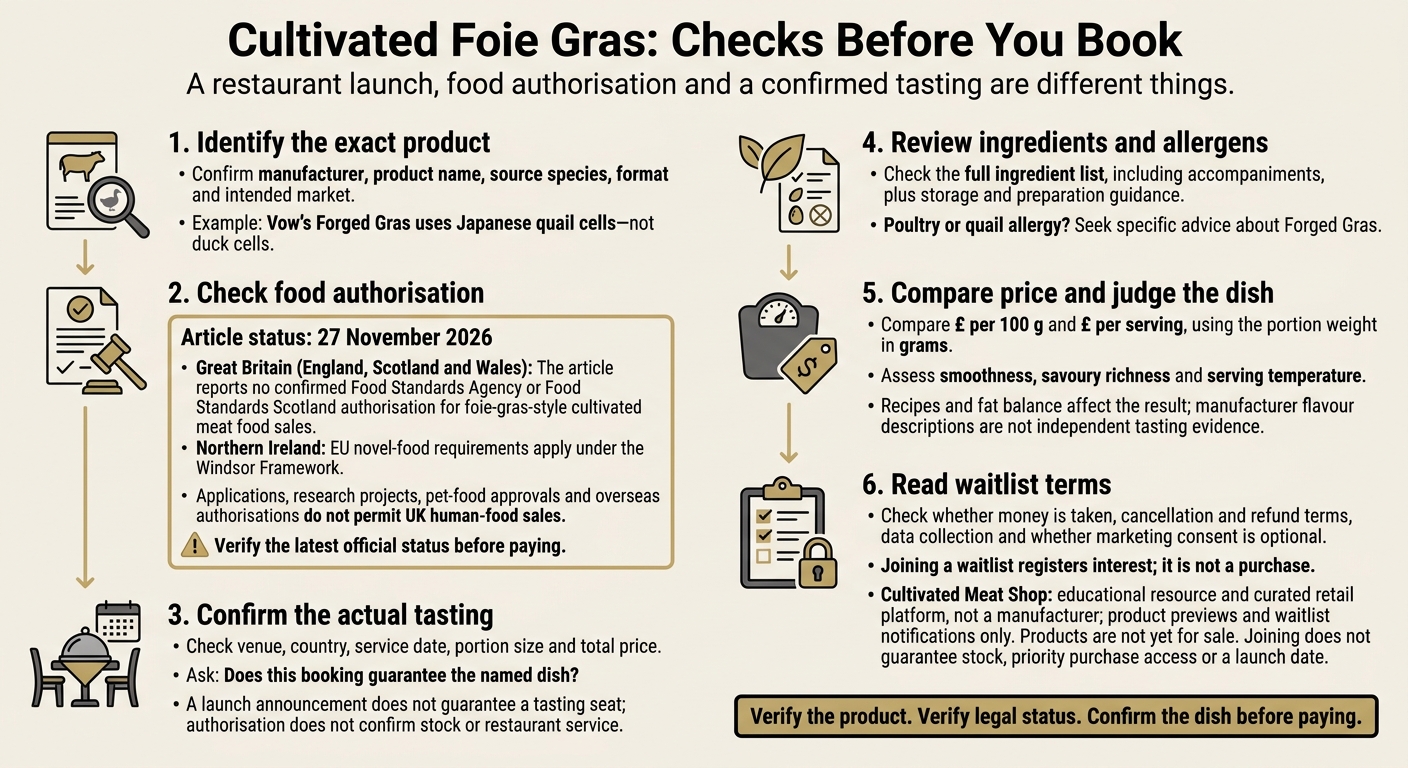
Foie-gras-style cultivated meat offers a route into luxury dining - not proof of category leadership or UK availability. Before paying for a tasting, check the exact product, food authorisation and whether the booking guarantees the dish.
Small, rich portions suit early restaurant tastings, but taste depends on the recipe, fat balance and serving temperature. Vow’s Forged Gras, for example, uses Japanese quail cells, rather than duck cells.
- Taste: judge smoothness and savoury richness, not manufacturer claims alone.
- UK access: the article reports no confirmed authorisation for human-food sales in Great Britain as of 27 November 2026; Northern Ireland follows EU novel-food rules.
- Cost and safety: check ingredients, allergens, portion weight and prices in £ per 100 g and per serving.
- Waitlists: Cultivated Meat Shop offers previews and notifications, not products for sale or guaranteed access.
Cultivated Foie Gras: Checks Before You Book
What to Expect from Taste and Texture
Richness, Smoothness and Savoury Notes
Manufacturers describe foie-gras-style Cultivated Meat as buttery and rich, with nutty and subtly sweet notes. [1] But those claims need product-specific evidence. The finished dish is the test - not the description.
For a luxury product, even small texture differences matter. In small foie-gras-style servings, smoothness takes centre stage, rather than the bite you’d expect from a whole cut.
| Feature | Conventional foie gras | Foie-gras-style Cultivated Meat |
|---|---|---|
| Flavour | Rich, savoury and complex | Described by manufacturers as nutty and subtly sweet [1] |
| Texture and mouthfeel | Smooth, buttery and firm when chilled | Described by manufacturers as having a smooth texture [1] |
When tasting, pay attention to smoothness, savoury richness and the effect of serving temperature. [1] Judge each version separately: recipes and formats affect the result. [1][2]
How Recipes and Serving Temperature Affect Taste
Seasoning, added fats and other ingredients shape the taste of the dish. So judge the finished plate, not just the ingredient. [1][2] Serving temperature also affects firmness and how quickly the fat softens. [1] The distinction between the ingredient and the finished dish becomes clearer in restaurant tastings, where recipes are more tightly controlled.
sbb-itb-c323ed3
Lab-Grown Foie Gras is Here to Take Away the Ethical Concerns
Forged Gras: A Restaurant Case Study
Forged Gras shows how premium Cultivated Meat moves from claims about flavour to a tasting served on a plate.
What Forged Gras Is Made From
Vow’s Forged Gras uses Japanese quail cells to make a foie-gras-style product, with the rich, smooth profile expected of premium foie gras.[1]
That profile matters most when chefs control the recipe and portion size.
Why Restaurants May Offer Early Tastings
Restaurants may be among the first to trial premium Cultivated Meat. Tasting menus let chefs control preparation, serve small portions and get feedback directly from diners.[1]
What to Check Before Booking
Before booking, confirm exactly what you’re paying for: the product name, venue, country, food authorisation, service date, portion size and total price. Check the full ingredient and allergen information, including accompaniments, and ask whether your booking guarantees the dish.[2]
Forged Gras is made from quail cells, so anyone with a poultry or quail allergy should seek specific advice, as exotic cultivated meat safety standards are strictly regulated.[2] A launch announcement doesn’t guarantee a tasting seat. Confirm the product, venue and booking status directly before paying or travelling.[2]
UK Availability and Waitlist Checks
Before booking a tasting or joining a waitlist, check whether the product can legally be sold in the UK.
UK Food Authorisation and Sales
Premium Cultivated Meat may first appear through limited restaurant tastings or waitlist-only listings. Check its legal status before paying. As of 27 November 2026, foie-gras-style Cultivated Meat has no confirmed Food Standards Agency or Food Standards Scotland authorisation for food sales in Great Britain (England, Scotland and Wales). Novel-food assessment covers production methods, composition, toxicology, allergenicity and nutrition.[1]
Northern Ireland follows EU novel-food requirements under the Windsor Framework. Applications, research projects, pet-food approvals and overseas authorisations do not permit UK human-food sales. Even authorisation would not confirm that a retailer stocks the product or a restaurant serves it; you can use a cultivated meat availability timeline checker for regional estimates.
Product Information and Waitlist Terms
If you find a listing, check the named manufacturer, exact product name, source species, format, intended market and regulatory status before signing up. Before buying, check the ingredients, allergens, storage and preparation guidance, price in £ and portion weight in grams.[1][2]
Joining a waitlist registers interest; it is not a purchase. Check whether any money is taken, how cancellations and refunds work, what data is collected and whether marketing consent is optional.
Updates from Cultivated Meat Shop
Cultivated Meat Shop is an educational resource and curated retail platform, not a manufacturer. It offers only product previews and waitlist notifications. Products are not yet for sale, and joining a waitlist does not guarantee stock, priority purchase access or a launch date.[1][2]
Conclusion: Checks Before Tasting or Signing Up
Foie gras’s richness, smooth texture and small servings make it a good early format for premium Cultivated Meat. That does not prove category leadership, though.[1][2]
Taste still comes down to the recipe, especially the fat balance.[1]
A restaurant launch does not mean the product is available in UK shops. Before signing up, check UK authorisation and confirmed supply, and the product and waiting list details above. Where prices are listed, compare the cost per 100 g and per serving, rather than pack price alone.[1][2]
FAQs
Does foie-gras-style Cultivated Meat avoid force-feeding?
Yes, foie-gras-style Cultivated Meat avoids force-feeding entirely [1][2]. It’s grown from animal cells in a controlled setting, removing the need for the intensive farming practices used in conventional foie gras production [1][2]. This method can recreate foie gras’s buttery texture and rich flavour while addressing the animal welfare concerns that have led to bans in several regions [1][3][2].
Is Cultivated Meat nutritionally similar to conventional foie gras?
Yes. Cultivated Meat is grown from animal cells and contains the same proteins, fats and micronutrients as conventional foie gras. The production process allows it to match the cellular structure and composition of conventional foie gras, giving it the same nutritional profile at the cellular level. In some cases, producers can adjust this profile during production to potentially improve specific health benefits.
What if my booked tasting dish becomes unavailable?
Early Cultivated Meat tastings are often limited-run events or exclusive trials held under strict regulatory supervision, so availability can change. The restaurant or organisers will usually follow their reservation policy. This may mean offering a different menu item or adjusting your booking.
If you hear about a tasting through Cultivated Meat Shop updates, check the booking terms directly with the venue and leave room for changes to your plans.