If you’re unsure whether cultivated meat is safe to eat, here’s what to check:
- Smell: A sour, rancid, or ammonia-like odour means it’s spoiled. A mild tang from vacuum-sealed packages should fade within 20–30 minutes. If it lingers, discard it.
- Colour: Pinkish-red is normal. Grey, brown, or dark spots indicate spoilage. Dry patches or excess liquid in the packaging are also warning signs.
- Texture: Slimy, sticky, or unusually soft textures suggest bacterial growth. Meat should feel firm and slightly moist.
- Packaging: Damaged or bloated packaging could signal microbial activity. Always check for tears, punctures, or swelling.
- Mould or Growth: Fuzzy patches or visible mould mean the meat is unsafe, as toxins may be present.
Even though cultivated meat is produced in sterile conditions, spoilage can still occur during storage or handling. When in doubt, throw it out to avoid potential health risks.
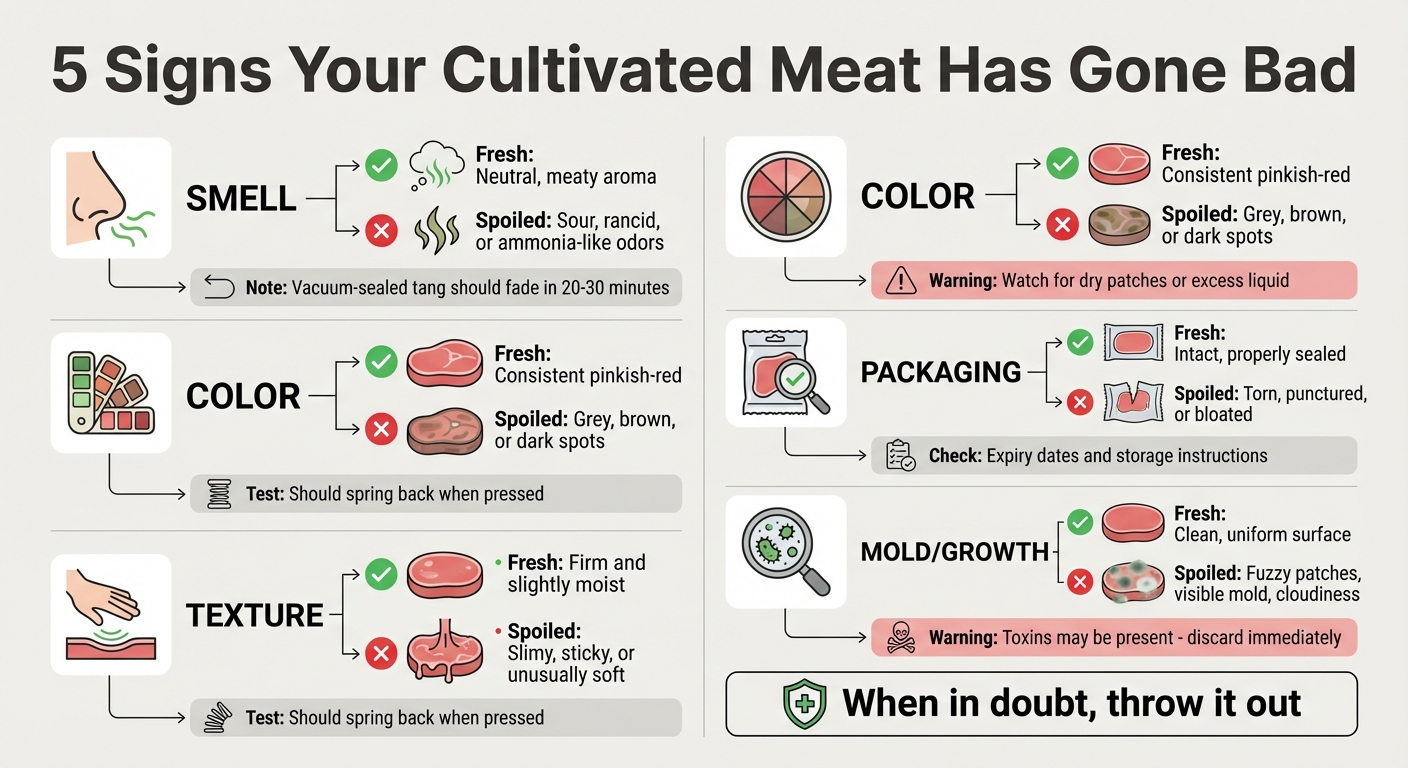
5 Signs Cultivated Meat Has Gone Bad: Visual Inspection Guide
Signs That Your Meat Has Gone Bad
Check the Smell
Your sense of smell is a reliable way to detect if meat has gone bad. Fresh cultivated meat has a neutral, meaty aroma - similar to conventional raw meat like beef or chicken - because it’s made from the same muscle and fat cells [3].
If you notice rancid, sour, or ammonia-like odours, it’s a clear warning sign of microbial contamination. The Food Standards Agency notes, “Infection is visible by microscope or by eye due to turbidity and a rancid smell” [1].
Sour or Rancid Odours
A strong, unpleasant smell is a red flag that fast-growing microbes have compromised the meat, making it unsafe to eat. If the odour is sour, ammonia-like, or overwhelmingly strong, it’s best to throw it away.
For vacuum-sealed packages, a mild, tangy smell upon opening is normal and should fade within 20–30 minutes. If the odour lingers beyond that, it’s safer to discard the meat [4].
Specific Smells in Cultivated Meat
Cultivated meat is produced in sterile bioreactors, so it starts off with a lower microbial load compared to conventional meat [2][3]. This means it’s less likely to carry pathogens like Campylobacter or Salmonella, which are often responsible for unpleasant smells in traditional meat [3].
However, cultivated meat isn’t entirely immune to spoilage. Additives like myoglobin and flavourings are used to replicate the familiar aroma and taste of meat [1]. If contamination occurs, the resulting spoilage odours - rancid or sour - are similar to those in conventional meat. Some infections, like mycoplasma, are particularly tricky because they don’t produce noticeable smells or visible signs. Studies suggest that between 5% and 35% of cell lines could be affected by this silent contaminant [1].
If the smell seems off, it’s best to err on the side of caution and discard the meat. Once you’ve checked the smell, move on to inspecting the meat’s colour to confirm its freshness.
Look for Colour Changes
The colour of cultivated meat can give you a good idea of its freshness. Typically, fresh cultivated meat has a consistent pinkish-red colour, thanks to the added myoglobin and haemoglobin - pigments naturally found in traditional meat and incorporated during production [1]. However, changes in colour, like discolouration, dark spots, or dry patches, could be signs of spoilage.
Discolouration and Dark Spots
If the meat starts turning grey, develops brown areas, or shows dark spots, it’s likely spoiled. According to the Food Standards Agency, "Infection is visible by microscope or by eye due to turbidity and a rancid smell" [1].
During the production phase, turbidity or cloudiness in the culture can indicate microbial contamination [1]. While consumers won’t see this stage, any resulting discolouration in the final product likely points to contamination during production.
It’s important to rely on multiple indicators - such as smell, texture, and colour - since not all signs of contamination are visible.
Dry Patches or Excess Liquid
Uneven moisture levels can also signal spoilage. Dry patches on the surface or pooling liquid at the bottom of the packaging may mean the meat is deteriorating. Excess liquid often points to bacterial activity, while dry areas might suggest improper storage or an extended shelf life.
Once you’ve checked the colour and moisture, move on to examining the meat’s texture to ensure its safety.
Feel the Texture
Checking the texture is a dependable way to determine if Cultivated Meat has gone bad. When fresh, it should feel firm and slightly moist, mimicking the muscle fibre structure and firmness of traditional meat[3][5]. If the texture seems unusual, it could be a sign that the meat is no longer safe to consume.
Slimy or Sticky Feel
A slimy or sticky layer on the surface is a strong indicator of spoilage[6][7]. This usually happens when bacteria start to grow on the meat's surface[6]. If the meat feels excessively sticky, overly wet, or slimy rather than just moist, it's best to discard it straight away[6][10].
"Fresh ground beef should be a little firm to the touch and crumbly. But if it's sticky and looks wet, that's not so good." - Dr. Lillian Craggs-Dino, Registered Dietitian, Cleveland Clinic[9]
Sometimes, a shiny or iridescent film might accompany the sliminess, further confirming bacterial activity[7][8]. Cultivated Meat undergoes spoilage in a way similar to traditional meat[3].
If you don't notice any sliminess, you can check the meat's firmness as the next step.
Changes in Firmness
Fresh Cultivated Meat should spring back when pressed. You can test this by gently pressing down on the meat[7]. If it doesn’t bounce back fully, the texture might have been affected by spoilage or repeated freezing and thawing[7].
Meat that feels unusually soft, mushy, or spongy is likely deteriorating[8]. Likewise, if it has become excessively dry or developed a crusty surface, it’s another sign that it may no longer be safe to eat[7].
sbb-itb-c323ed3
Inspect the Packaging and Dates
Before opening any product, take a moment to check its packaging and dates. Damage or unusual changes can signal potential safety issues. Examining these details closely can help ensure the product is safe to consume.
Damaged or Bloated Packaging
Packaging that’s torn, punctured, or bloated could be a sign of microbial contamination. When microbes are active, they can produce gases that cause swelling or compromise the vacuum seal - this is a clear red flag. If you spot any of these issues, it’s best to discard the product immediately.
Another warning sign to watch for is turbidity or cloudiness in liquid components. These changes can indicate the early stages of microbial growth.
"Since production takes place under sterility and controlled conditions, microbial risks in cultivated and microbial protein products are believed to be lower than in conventional animal-derived foods." – Food Standards Agency [11]
Expiry Dates and Storage Instructions
Always check the expiry date and make sure to follow storage instructions exactly. Cultivated meat, unlike traditional meat, doesn’t have protective microflora, making it more sensitive to temperature changes.
"At present, there was not data returned in the literature pool that gave any indication to the final stability/shelf-life of the product." – Food Standards Agency [2]
Even if the expiry date hasn’t passed, improper storage - like leaving the product out of the fridge for too long - can make it unsafe. In such cases, it’s better to throw it away than take the risk.
Look for Mould or Growth
Once you've checked the smell, colour, texture, and packaging, take a close look at the meat for any signs of mould or unusual growth. If you notice anything out of the ordinary, such as mould or fuzzy patches, it's crucial to discard the Cultivated Meat right away.
Cultivated Meat is made under tightly controlled conditions, so the presence of mould or growth points to a significant issue in those controls. Microbes can multiply quickly, consuming the nutrients in the product and potentially making it unsafe to eat [1]. According to the Food Standards Agency (FSA), visible signs of contamination mean the product should be disposed of immediately [1].
Mould isn't just unsightly - it can indicate the presence of harmful toxins like mycotoxins, endotoxins, or exotoxins, which can be dangerous even in small amounts [11]. Experts Rosario Romero and Emiline Quill from FSA Research and Evidence explain: "Another microbial related risk is the presence of toxins such as endotoxins, exotoxins (e.g. enterotoxins), mycotoxins and cyanotoxins, some of which can be harmful to humans at low concentrations" [11].
It's also important to note that cooking won't solve the problem. Many of these toxins are heat-stable, meaning they survive the cooking process [1]. If you detect cloudiness, odd surface growth, or any fuzzy spots on your Cultivated Meat, the safest option is to throw it away immediately.
Conclusion
To spot spoilage, look out for sour odours, changes in colour, an unusual texture, damaged packaging, or visible mould.
Although Cultivated Meat starts with a lower microbial load due to its sterile production process, it can still spoil in similar ways to conventional meat. Contamination may occur during packaging or if production standards are compromised [2] [3].
If you notice anything unusual about the smell, colour, or texture, it’s best to discard the meat immediately.
As Cultivated Meat becomes more available in the UK, proper storage and careful handling will be essential for enjoying this alternative to conventional meat safely. Keep up with Cultivated Meat Shop for tips on safe practices and the latest updates in this growing market.
FAQs
What does the smell of cultivated meat tell you about its freshness?
When it comes to cultivated meat, its smell can tell you a lot about its freshness. If you notice a sour, rancid, or generally unpleasant odour, it could indicate bacterial growth, making the meat unsafe to consume. Trust your nose - if something smells off, it’s best to discard it to protect yourself from potential health risks.
What are the signs that cultivated meat has spoiled?
When cultivated meat spoils, there are a few tell-tale signs to watch for. You might notice changes in colour, like fading or darkening. An unpleasant smell, a slimy or sticky feel, or visible slime are also strong indicators that it’s no longer safe to eat.
Trust your senses - if the meat doesn’t look, smell, or feel right, it’s best not to take any chances. When in doubt, throw it out to prioritise safety.
Why should you inspect the packaging of cultivated meat?
Inspecting the packaging of cultivated meat is crucial for maintaining its freshness, quality, and safety. Good packaging acts as a shield, protecting the meat during transport and storage while minimising the risk of spoilage or contamination.
Pay attention to any visible signs of damage, like tears, leaks, or broken seals, as these could compromise the product. It's also important to check the use-by date and follow the storage instructions to ensure the meat stays safe to eat.